
Maths
Maths at Hethersett VC Primary School
We believe every child can become a confident, resilient, and skilled mathematician. Our vision is to develop problem solvers, logical thinkers, and fluent learners who can apply their knowledge in real-life contexts.
Our aims are for all pupils to:
- Become fluent in the fundamentals of maths through regular practice and deep understanding
- Reason mathematically, exploring patterns, making connections, and justifying their thinking
- Solve problems by applying maths to a range of situations, breaking down challenges, and persevering
Our Approach – Maths No Problem
We use the Maths No Problem scheme, based on the Singapore Method, which focuses on:
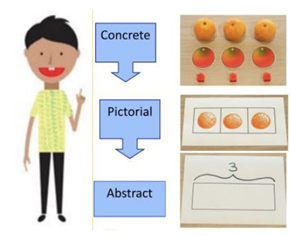
- Concrete, pictorial, and abstract representations to build deep understanding
- Mastery learning, ensuring concepts are secure before moving on
- Reasoning and discussion, encouraging pupils to explain and justify their methods
This approach assumes that every child can master maths with the right support. It avoids rote learning and promotes fluency, flexibility, and confidence in tackling non-routine problems.
What Maths Looks Like in Our School
Children learn through:
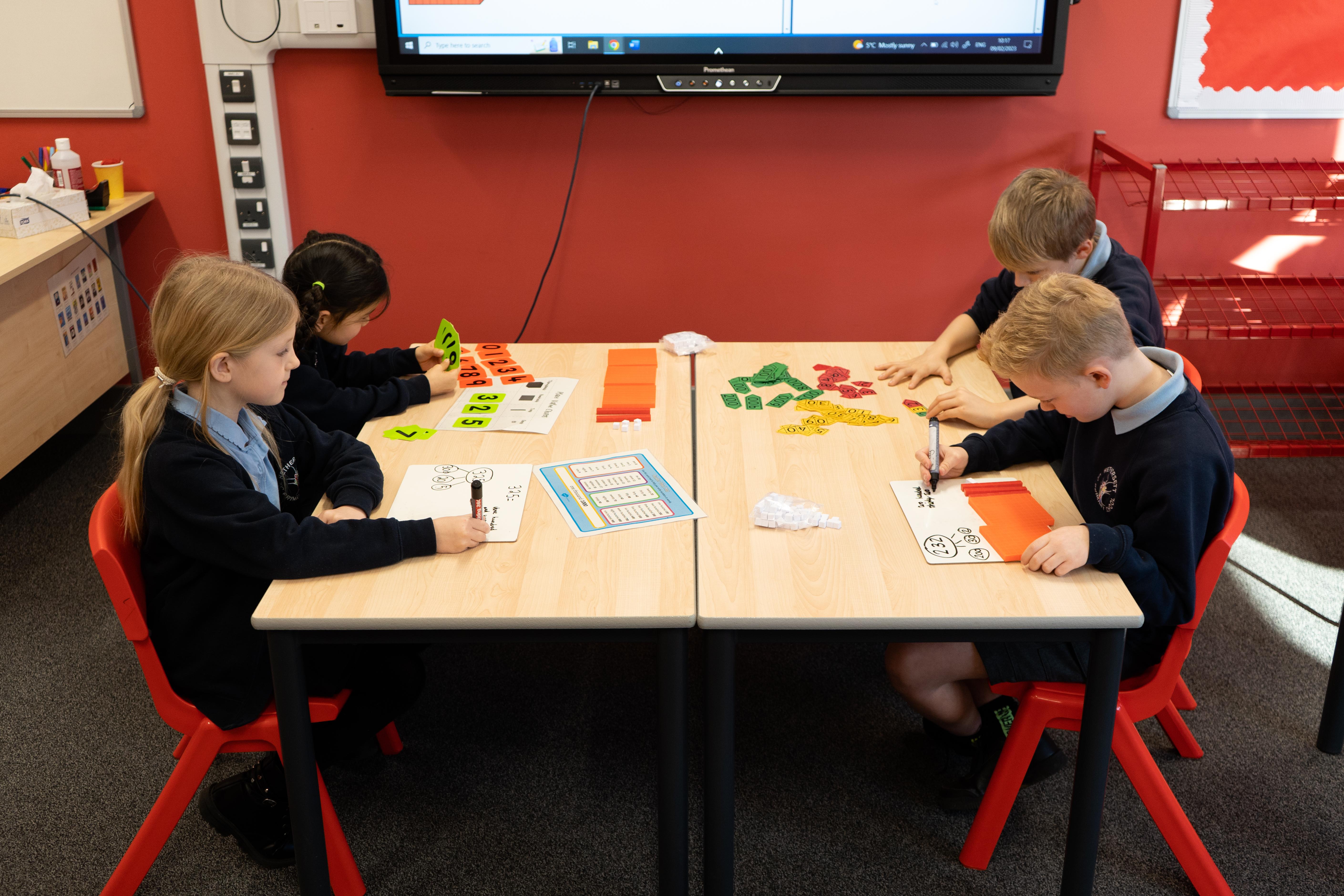
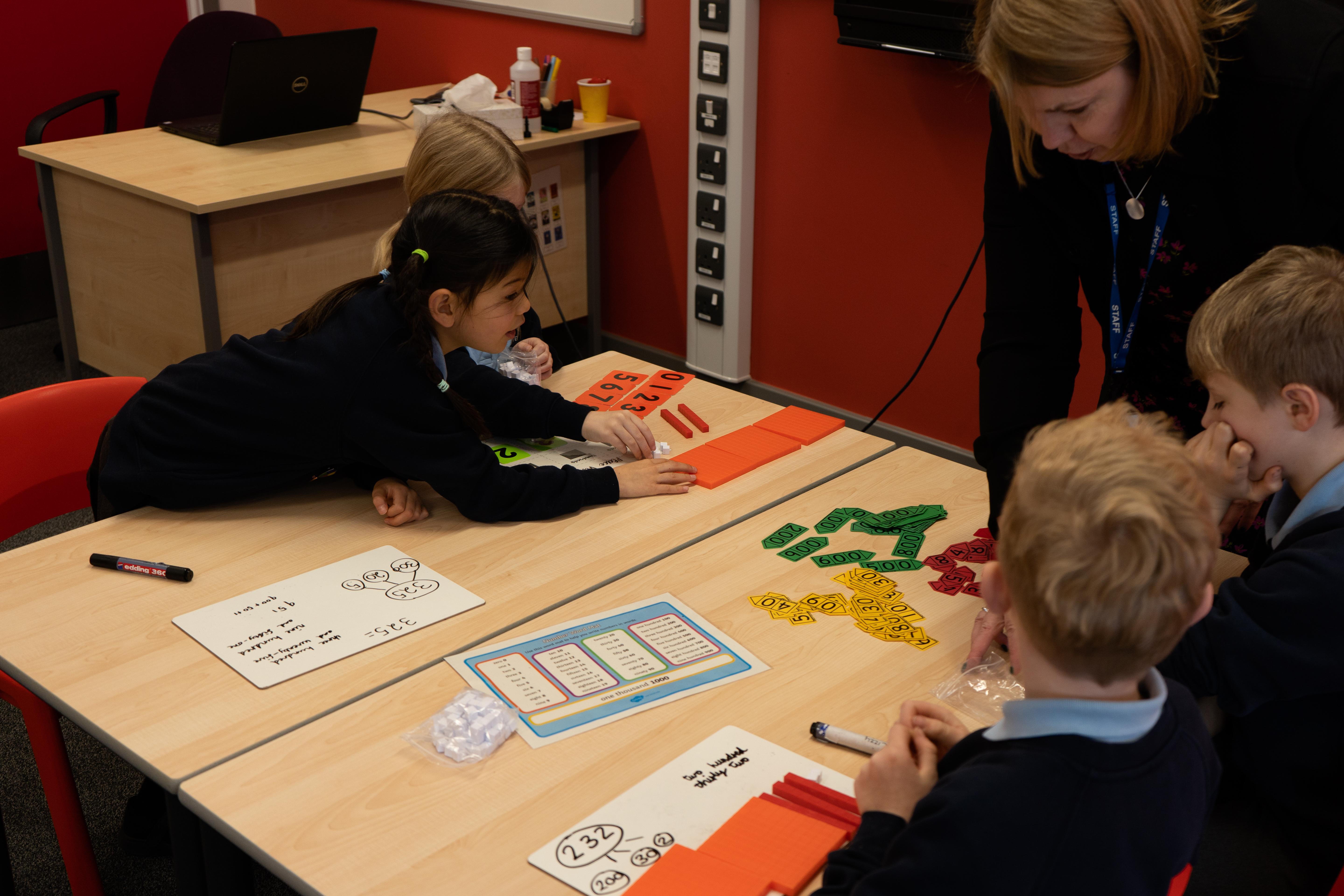
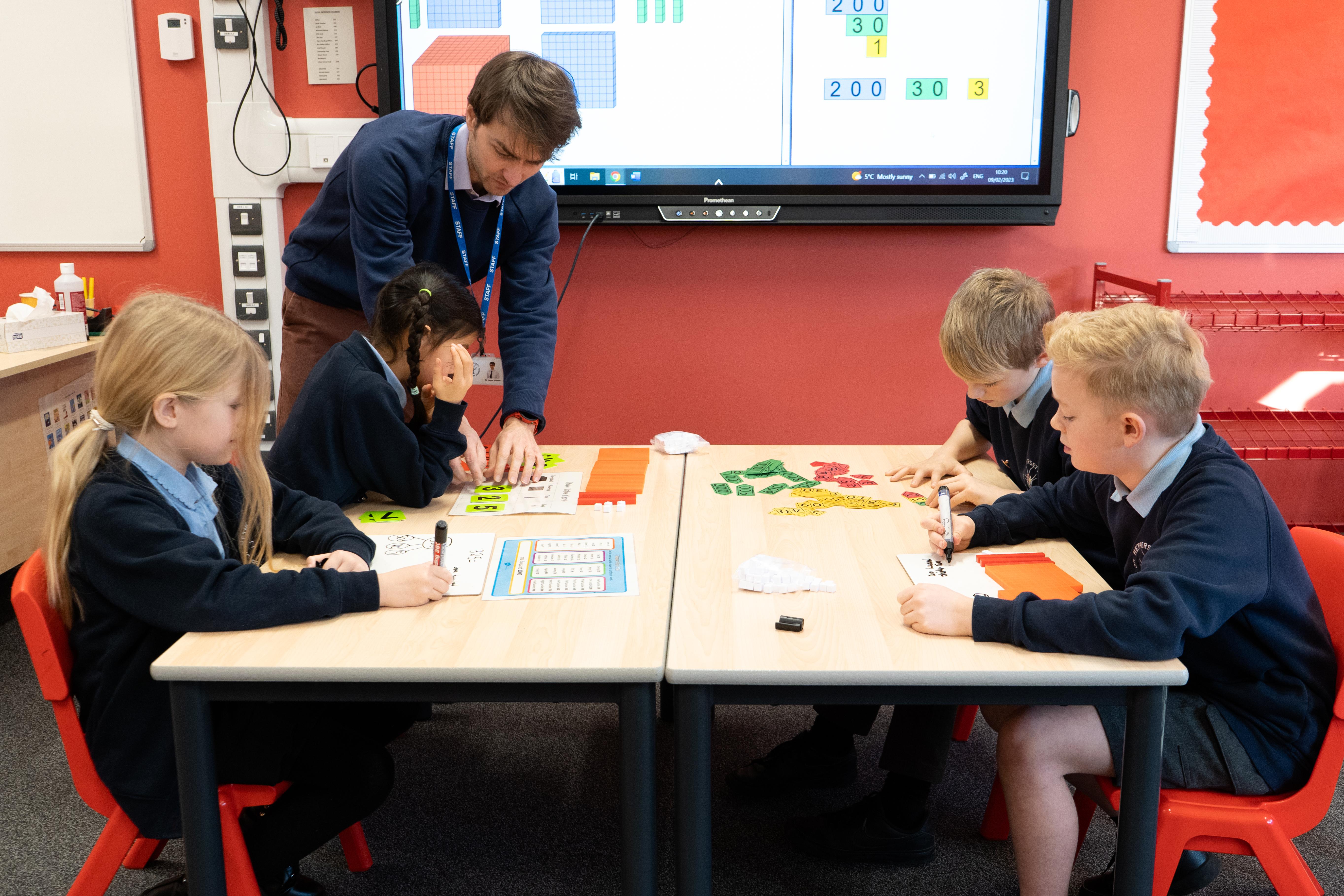
- Hands-on experiences, using concrete manipulatives to visualise concepts
- Visual representations, moving from practical to pictorial and then abstract methods
- Collaborative discussion, explaining thinking and exploring multiple strategies
Our goal is for pupils to understand the process, know the why, and apply their learning creatively.
What is Concrete?
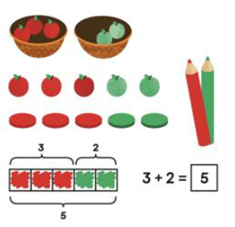
Concrete is the ‘doing’ stage, using concrete objects to model problems and to bring concepts to life by allowing children to experience and handle physical objects themselves. All new concepts are learnt first with a ‘concrete’ or physical experience. For example, if a problem is about adding up pieces of fruit, the children might first handle actual fruit before progressing to handling counters or cubes which are used to represent the fruit.

What is Pictorial?
Pictorial is the ‘seeing’ stage, using representations of the objects to model problems. This stage encourages children to make mental connections between the physical object and abstract levels of understanding by drawing or looking at pictures, diagrams or models which represent the objects in the problem.
Building or drawing a model makes it easier for children to grasp concepts as it helps them to visualise the problem and makes it more accessible.
What is Abstract?
Only once a child has demonstrated that they have a solid understanding of the ‘concrete’ and ‘pictorial’ representations of a problem, can they access more abstract representations involving mathematical symbols. The stages ensure clear progression and extension in learning.
What does a lesson look like?
There are four main stages of a Maths - No Problem lesson. These components are: exploration, structured discussion, practice and journalling. There is no right or wrong order to these components and the lesson structure can vary. Before we move on to the individual parts of a lesson, it is important to note that we do not necessarily have to include all five components in every lesson for the learning to be well-rounded and complete.
Lessons typically are broken into five parts. The parts to a lesson are:
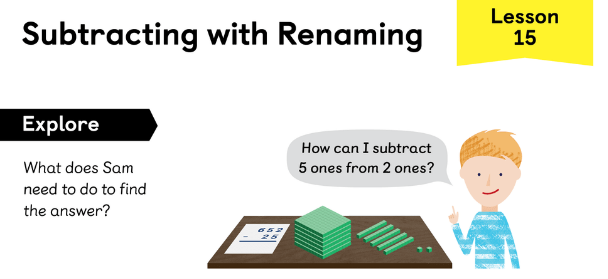
Exploration – The teacher will present the whole class with a problem to explore. We call this the anchor task, it will be the central focus of the whole lesson, and it can be found in the Explore section of the textbooks. The anchor tasks have been designed to motivate learning for the whole class. During this part of the lesson, learners will be working in groups exploring the task themselves, however they see fit, whether this is with concrete resources, modelling or different strategies etc. After teachers have presented the problem and set a time for exploration, their role is observation and assessment. They are giving their class independence to experiment.
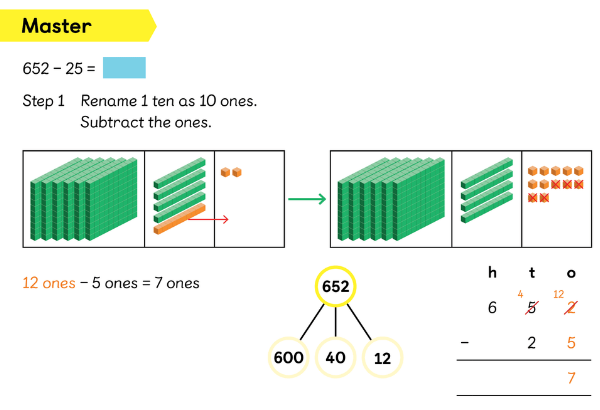
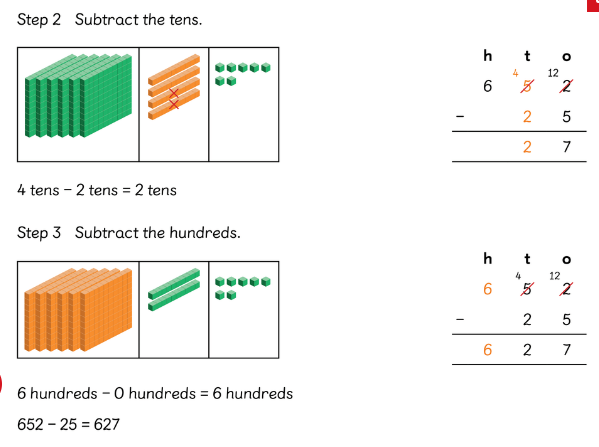
Structured Discussion – Following Zoltan Dienes’ theory, structured discussion comes after exploration. This part of the lesson is a teacher-led whole class discussion. The aim is to use targeted questions to draw out from the group, different methods to discuss and any misconceptions to rectify. The Master section of the book can provide some anticipated methods for solving the problem and teachers can use this to guide the discussion. The questioning will be based on: ‘What are you doing in this strategy to solve the problem and why are you doing it?’
Practice - In the Maths - No Problem programme there are two types of practice: guided and independent. Guided Practice can be found in the textbook, where learners can work through the questions in pairs, whereas Independent Practice can be found in the workbook and as the name suggests pupils work through these by themselves. Both sets of questions have been designed with variation in mind, so learners can develop a deeper understanding of the topic as they work through the exercises. During both types of practice, the teacher will be observing. If they notice a common misconception throughout the class, they could choose to close this section of the lesson with a plenary to immediately address it. Additionally, in each chapter you will find various Activity Times which have been included to help learners explore mathematical concepts further. And there is a Mind Workout at the end of each chapter to encourage pupils to work on their greater depth thinking.
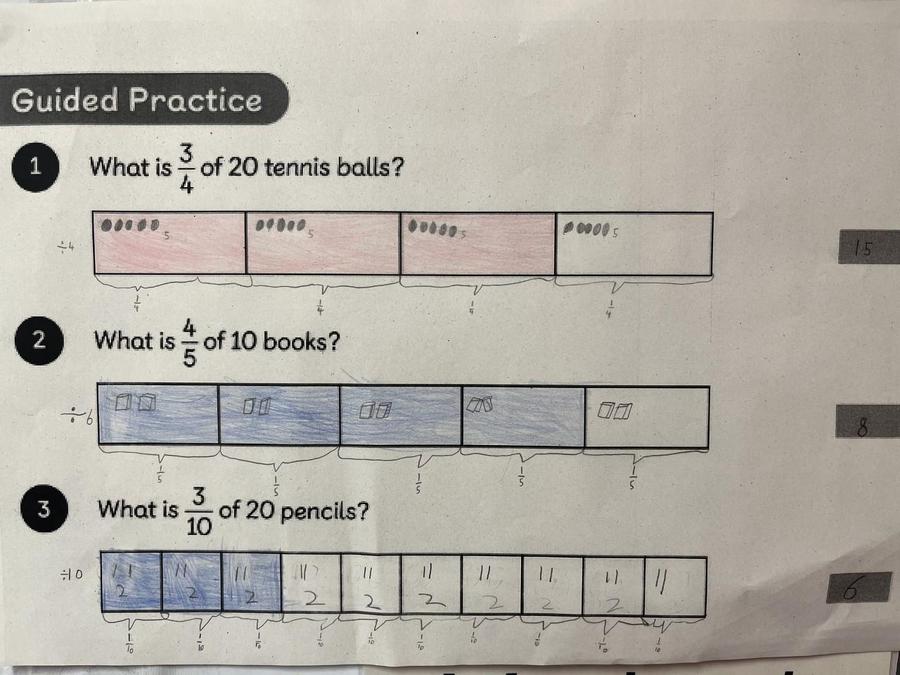
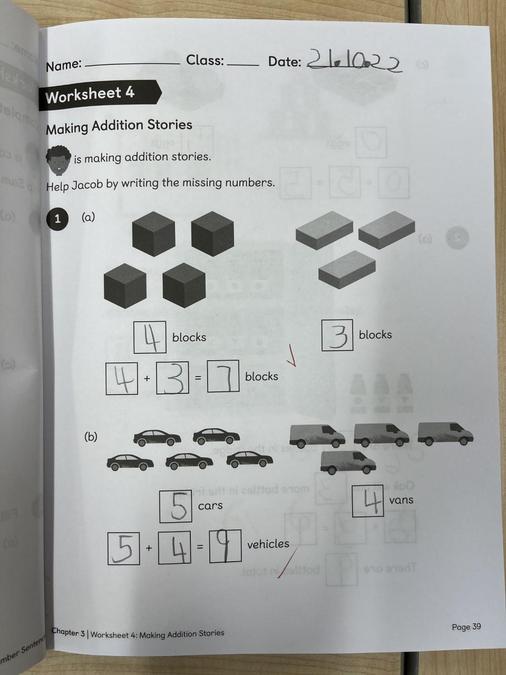
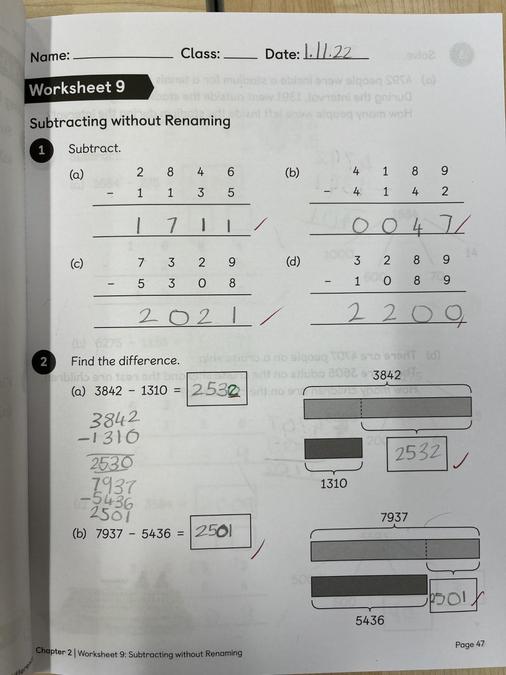
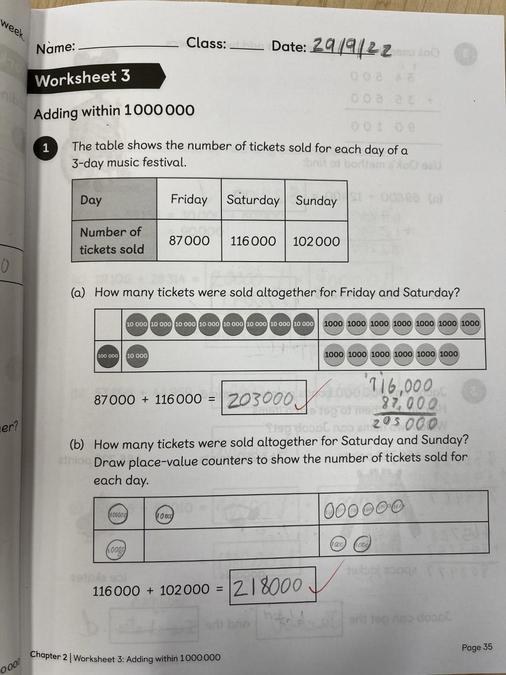
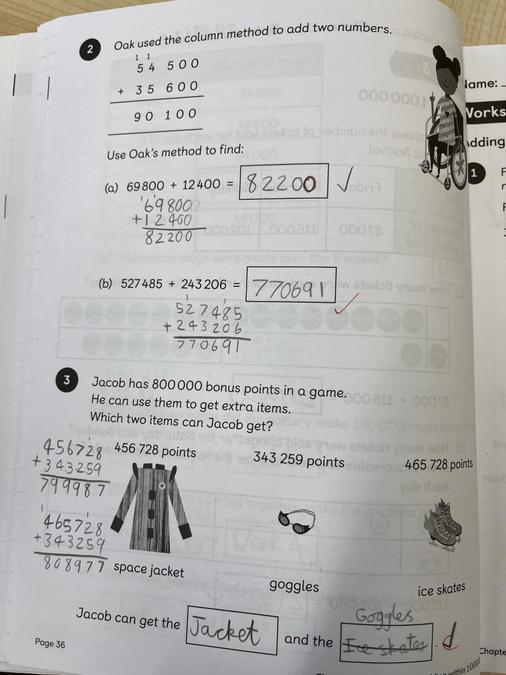
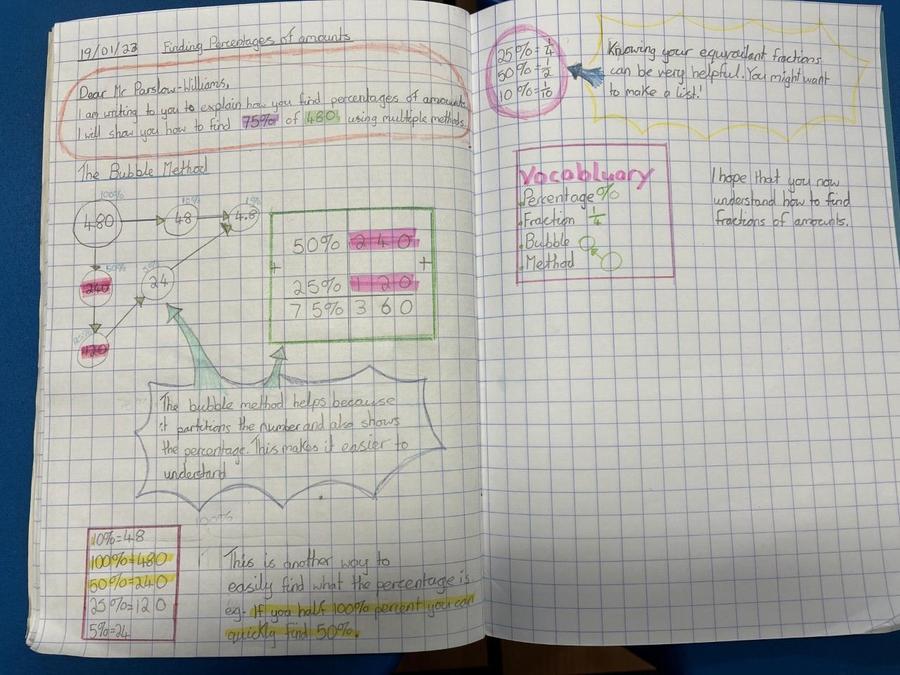
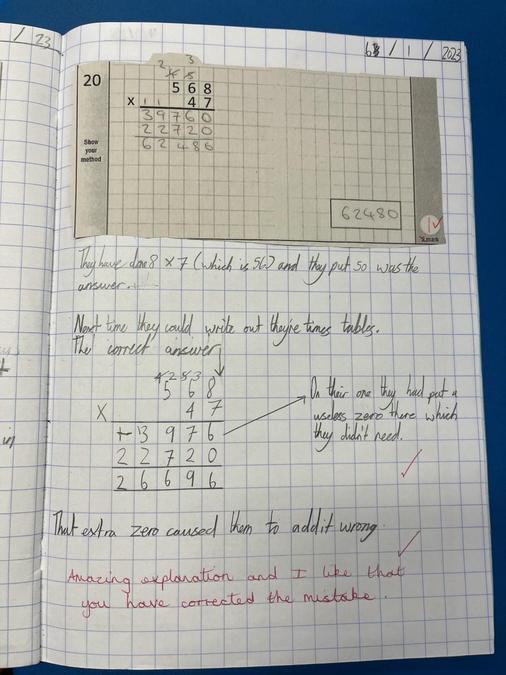
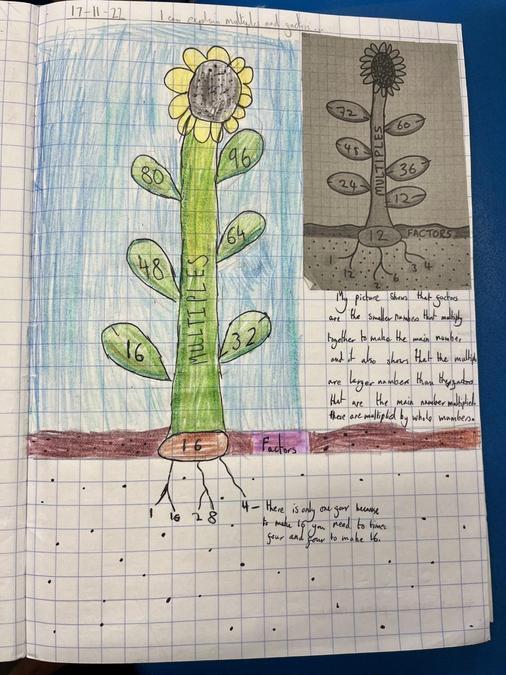
Journalling – The aim of journalling is to give learners a question or task based on the lesson’s problem, so it could be creating a story for an equation, taking a Guided Practice question and explaining the calculation, picking one method for solving a problem and justifying why it is the most effective, etc. It allows learners to explore new ideas and to create a completely personal journal entry, making it easier for teachers to assess which individuals have truly grasped the concept and who in the class is working at a greater depth. It also gives learners an opportunity to develop their communication skills by learning to articulate their ideas and explicate their mathematical thinking that surfaced during exploration. There are four types of journalling - descriptive, evaluative, creative and investigative - and it is important to try and utilise all of them throughout the school year. For some inspiration you can find a Maths Journal idea at the end of each chapter or read the Hethersett VC Primary School journalling guidance document.
Here are some examples of journals in Hethersett VC Primary School:
Where can I find out more about Maths No Problem?
More information can be found on the Maths No problem parent videos using this link:
https://mathsnoproblem.com/en/parent-videos/
How can I support my child in Maths?
Encouraging a love of numbers throughout childhood helps children to develop strong foundation of understanding, which is often referred to as having good Number Sense. Children with a strong number sense understand the relationships between numbers and can be more creative, systematic and reflective mathematical thinkers.
- Engage with the maths around you – look for shapes (road signs) and numbers (number plates) and discuss what you see – and don’t see.
- Play card and board games with your child – look for patterns and discuss strategies with each other.
- Shop together and allow your child to compare and calculate costs of items in your shopping basket.
- Cook together – look at recipes and compare the measures of items, weigh ingredients and look for opportunities to adjust portions in recipes.
- Take the bus somewhere and ask your child to help to read the timetable and to plan your journey.
- Ask your child to tell you the time whenever possible allowing them to familiarise themselves with clocks.